

Invest in Joburg
Why Invest
Now, more than ever, Johannesburg, the economic capital of South Africa (SA), offers significant opportunities. The City is an outstanding investment destination, offering the best access to markets across Africa, an investor-friendly environment, a stable democracy as well as excellent telecommunications and infrastructure.
Africa’s most powerful economy
Our City, known colloquially as Joburg, is not only the financial and economic hub of sub-Saharan Africa but also Africa’s most powerful economy. It is the perfect location from which to tap South African, African and Indian Ocean markets.
The economic environment within the City is upbeat, as we continue to bring new inter-modal transport systems online and benefit from major government and provincial capital injections to upgrade our infrastructure.
Joburg’s economy accounts for 15% of South Africa’s economic output and 44% of that of our province, Gauteng. It is larger than that of most neighbouring countries, equivalent to the eighth biggest country in Africa, or 66th in the world.
Quality of life and low cost of living
In Joburg you’ll find great quality of life, low cost of living, highly developed first-world economic infrastructure, easy access to sophisticated information technology, sound government policies, reasonable tax rates and competitive business costs.
We are the gateway to the markets of the rest of Africa. The world’s second largest continent contains about 30% of the world’s mineral reserves and has a population of more than 1 billion, making it the second most populous after Asia.
(Source: US Investors in Africa report). It is also the ideal base for doing business with the Southern African Development Community (SADC), a grouping of 15 countries with more than 277 million people.
SA has formed strong economic trading blocs to provide access to key markets and also has free trade agreements with SADC, the EU and the European Free Trade Association (EFTA), as well as a preferential trade agreement with Mercosur, the major South American trade bloc.
SA is one of the world’s largest emerging economies, with Joburg playing the key role, particularly in finance and business.
Financial capital of South Africa
Joburg is the financial capital of SA and hosts the headquarters of more than 70% of South African companies. It is home to the largest stock exchange on the continent. Joburg’s inland port, the largest in Africa and fifth-largest in the world, handles 30% of the country’s exports.
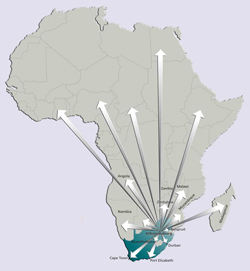
Ideal base to reach 14 Southern African Development Community (SADC) countries comprising over 250 million people.
SA has free trade agreement with SADC countries.
Joburg’s OR Tambo International Airport is the biggest and busiest freight and passenger hub in Africa.
Over 20 major international airlines fly to OR Tambo International Airport.
Joburg has 3 airports with links to Africa (OR Tambo International, Lanseria International and Grand Central Airport).
Road and rail links to all the main cities and ports in the sub-continent, including Maputo, Durban, Richard’s Bay, Port Elizabeth and Cape Town.
The largest inland port in Africa and the largest container depot in SA, the City Deep Transport Logistics Hub, are found in Joburg.
Global Competitiveness Ratings highlight Johannesburg’s role in Africa and attractiveness for FDI:
Africa’s Cities of Opportunities: Overall Index 2015 (PWC 2015 Into Africa Report)
1 Cairo
2 Tunis
3 Joburg
4 Casablanca
5 Algiers
Trade Agreements

These include:
Free trade agreement with South African Development Community (SADC) members, comprising 14 countries.
Free trade agreement with the European Union (EU), the SA-EU Trade Development Co-operation Agreement.
Preferential trade agreement with Mercosur, the major South American trading bloc.
In addition, South Africa continues to strengthen its relations with Asia, through increases in two-way trade and finalising co-operation agreements in areas such as scientific and technological exchange, technology transfer, investments and overseas development assistance.
Financial Capital of SA
The JSE Ltd has operated as a market place for the trading of financial products for nearly 120 years. In this time, the JSE has evolved from a traditional floor based equities trading market to a modern securities exchange providing fully electronic trading, clearing and settlement in equities, financial and agricultural derivatives and other associated instruments and has extensive surveillance capabilities. The JSE is also a major provider of financial information.
- Living in Joburg costs around half that of major European cities. The Mercer Cost of Living Survey in 2018 ranked the City at 177th out of 211 countries, making it one of the least expensive expat destinations in the world.
- Joburg is ranked 11th globally as the best emerging market centre of commerce (out of 65 centres)
- Joburg is home to the largest stock exchange on the continent, the Johannesburg Stock Exchange
- JSE in global derivatives Top 10
- Over 70% of South African companies are headquartered in Joburg, including 3 SA firms ranked in the Global Top 40, namely MTN (7), Sasol (24) and Bidvest (37) (AT Kearney Survey for BusinessWeek, involving 2500 companies in 18 countries)
The City also hosts the South African headquarters of more than half of the world’s top 20 global brands, with an increasing number of blue-chip companies investing in Joburg, including Bank of India, Barclays, Lafarge, Huawei, Hi-Sense, LG, L’Oréal, Ranbaxy, SBI, Scania, Sinosteel, Sony Ericsson and Tata Group.
Economic Growth
Largest contributor to SA GDP
Johannesburg is the capital of South Africa’s most prosperous and richest province, Gauteng (a Sesotho name meaning ‘Place of Gold’). Due to Joburg’s attraction both in terms of opportunity and socio-economic growth, it is not only the most densely populated city in SA with a population of 5,04 million (SA slightly over 56 million) but also has the highest number of economically active people
As the country’s biggest metropolitan economy, Joburg is the largest single metro contributor to national economic product, generating 15% of SA’s wealth and around 44% of Gauteng’s economic output. Over the past 10 years, the City’s high economic growth rate has undoubtedly been the major driver behind the performance of the national economy. Joburg’s economy is at least one and a half times bigger than that of the second biggest metro, Cape Town. It has consistently outdone the economic performance of the country’s other metros, making the City the country’s economic hub.Source of basic data: IHS Markit Regional Explorer 2018 (1484)
Growth rates
Over a 20 year period (1996 – 2017), Joburg’s average growth rate was 3.6%, marginally higher than both the provincial economy (3.0%) and national (2.7%) economies.
Unsurprisingly, the City enjoys the highest proportion of formal sector employment in SA, currently about 7 – 10 % higher than in all the other Metros.
Looking at the educational profile of the City, the population is, in general, becoming better educated. For example, from 2003 to 2013 the number of people with a ‘matric and a Bachelor’s’ degree’ increased with an average annual rate of 6.85%.
Positive long-term economic growth outlook
Johannesburg’s strong economic fundamentals and structure has meant it grows consistently faster than the country at large. There has been a 92% expansion in Joburg’s economic output since 1996. All sectors have grown, with the financial and business services sector being particularly strong.
Joburg has recently introduced several key interventions to ensure continued economic growth, despite the challenges of uneven global growth, electricity supply constraints and labour relations tensions. These include:
• Improving service delivery for businesses;
• Creating Priority Economic Zones and Business Clusters;
• Fast-tracking decision-making and processing of all large, job-creating investments into the City; and
• Establishing SME Hubs across the City.
Diversification to fast growing sectors
One of the key reasons for the City’s growth has been a diversification from its original mining base to globally fast-growing sectors, in line with the country’s shift to a diversified manufacturing and services economy. In 2017, mining contributed just 1% while financial and business services contributed close to 30%, community services 17%, manufacturing 12%, electricity, water and gas 3%, trade 21%, transport 6% and construction 6%. Source of basic data: IHS Markit Regional Explorer 2018 (1484)
Financial and Business Services:
This star of the Joburg economy has recorded consistently high growth rates and has been a net creator of employment, with all the large banks, a number of the large insurance companies and many Information and Communications Technology (ICT) companies located in Joburg. Apart from financial and ICT, the legal, accounting, market research, architectural, engineering and real estate business activities are also well placed for continued contribution to the City’s economy. Further, this sector is an important enabling sector, underpinning the growth of important consumer expenditure sectors such as retail sales.
Community and Personal Services:
Growth in this sector reflects the expansion of public sector services to address infrastructure, education and health issues at national, provincial and metropolitan government levels, with the government sector tending to be fairly immune to economic factors.
Manufacturing:
The nature of manufacturing in Joburg is of a higher value add and the strategy for the Joburg economy has been to increase activities at the tertiary level of manufacturing, promoting high-value added manufacturing.
Trade:
This encompasses all forms of wholesale and retail trade, including the sales, maintenance and repair of motor vehicles, as well as the hospitality and leisure industries.
Transport and Communication:
Making up a relatively small portion of the City’s economy, the areas of logistics and telecommunications are vital for the City’s development and the performance of other critical sectors, such as finance and business services (telecommunications) and manufacturing, trade and construction (transport). Both logistics and telecommunications form part of the City’s longer term economic development strategy, with projects such as the City Deep Transport Logistics Hub being vital components.
Construction
City of Johannesburg construction sector was one of the resilient sectors over the years from 2006. It was one of few sectors that has continued to grow over time. Commercial developments, public transport programmes and public spending on infrastructure programmes supported growth in the sector.
Skills Development
Real Estate
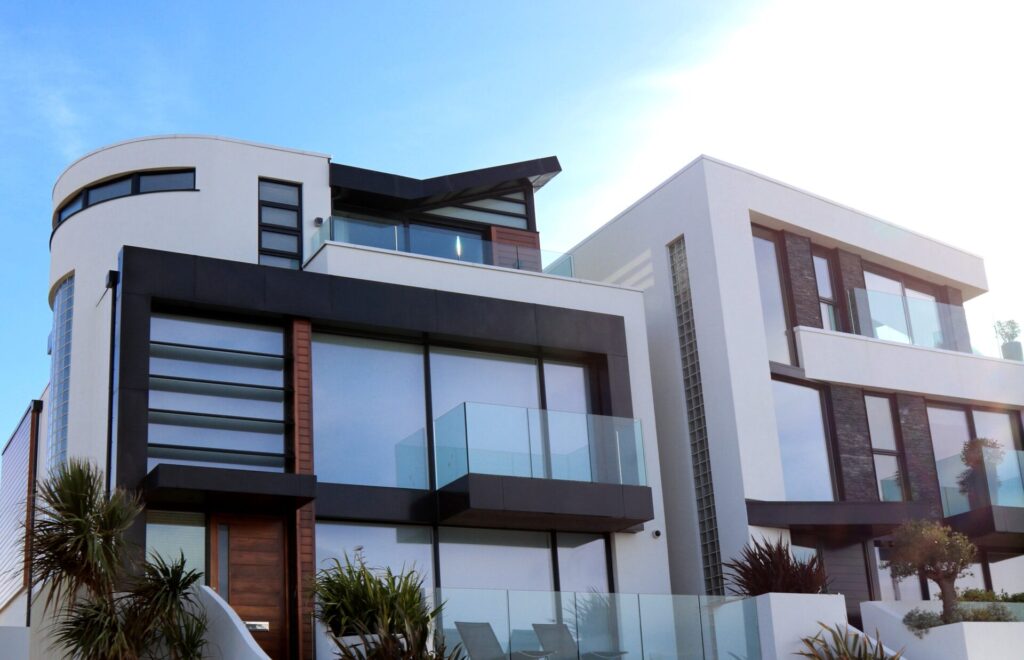
Although SA’s property market has been through a boom, investors can still enter the real estate market at realistic market prices. Importantly, SA does not have non-recourse debt, the bulk of properties are full title, while the rights of property owners are protected in the Constitution, giving investors security.
The country also has a very sophisticated listed property sector, with high liquidity, providing an alternative investment option for those who do not want direct ownership of land or property.
This provides investors with an opportunity to come in at a very realistic market price, unlike during the overheated property market over the previous five years.
Further, SA has a very sophisticated listed property sector, with high liquidity, providing an alternative investment option for those who do not want direct ownership of land or property.
To view results of the SAPOA / IDP South Africa Annual Property Index, click here .
For more info, visit the SAPOA website, the representative body of the commercial and industrial property industry in SA.
Property Market:
Leaders in the SA property market, such as JHI, with approximately ZAR 31-billion of assets under management, see interest picking up again. Whereas one of the biggest constraints for all investments, including property, is that liquidity globally is under pressure, in SA, if you have the balance sheet to back it up, our banks are still open for business and are supportive of FDI.
Looking forward, SA is experiencing green shoots everywhere in property economics, for example GDP is turning, business confidence is making an upward turn and more positive manufacturing production volumes are coming through. This, combined with the fact that we are coming off a very low vacancy rate in the region (overseas average is 7, SA is 3), is encouraging for investment. Plus, SA does not have non-recourse debt, the bulk of properties are full title, while the rights of property owners are protected in the constitution, giving investors security.
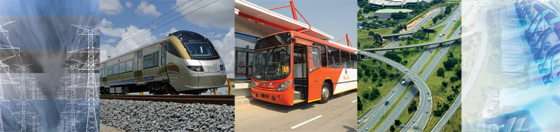
And Joburg is playing a prominent and trend-setting role in this. For example, the City has implemented an innovative ZAR 1.2-billion Bus Rapid Transit system (called Rea Vaya, which means ‘We are Going’ in Sesotho), designed to provide affordable, efficient and safe transport to the City’s commuters. The first phases are up and running and further roll out will connect the Inner City and Sandton CBDs. The implementation serves as a blueprint for similar systems in the country’s other main metropolitans. Another major infrastructure project was the Gautrain Rapid Rail, which links Johannesburg, the OR Tambo International Airport and Pretoria.
Further, the South African National Roads Agency Limited (SANRAL) is rolling out an impressive upgrade of current roads and building of new roads. The ZAR 20-billion Gauteng Freeway Improvement Project (GFIP) will eventually total approximately 560km of roads to improve accessibility and reduce congestion.
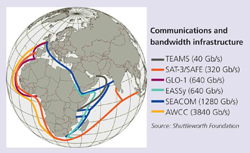
All these projects form part of an overall strategy to establish a strong inter-modal transport system for the City and the province, serving to contribute to further development of the region’s economy. Communications and bandwidth infrastructure has been boosted through projects such as the Eastern Africa Submarine Cable System (EASSy) and Seacom, the SEA Cable System, along the East coast of Africa and SAT-3/WASC (West Africa Cable System) along the West coast.
Joburg is building a sophisticated broadband network and 900km of fibre-optic cable has already been rolled out. This is a public/ private project which will go live during 2015 to aid economic development, reduce telecoms costs and establish Joburg as a digital smart city. We are also rolling out free public Wi-Fi hotspots, including mobile ones on buses, and blanketing targeted areas with free Wi-Fi.
Investment in infrastructure is not only building a world-class City and region, but also provides substantial investment opportunities, creates a more conducive business environment and promotes SA’s role in Africa and the global economy.
Developments include:
R1.2-billion Bus Rapid Transit system (Rea Vaya – ‘We are Going’ in Sesotho), for more info, go to Rea Vaya
High-speed rail transport system, the Gautrain, providing rapid transport between Johannesburg and Tshwane (Pretoria); Sandton CBD and the OR Tambo International Airport, for more info, go to Gautrain
R20-billion Gauteng Freeway Improvement Project, involving upgrading of existing roads and building of new roads to improve accessibility and reduce congestion, for more info, go to the National Roads Agency, under Major Projects
Communications and bandwidth infrastructure projects, including:
– the Eastern Africa Submarine Cable System (EASSy), for more info, go to the EASSy site
– SAT-3/WASC (West Africa Cable System), for more info, click here
– Joburg’s public-private broadband network project to ensure Joburg is a digital smart City, for more info.
City’s plans to ensure sufficient power capability beyond 2010, catering for the City’s continued growth and power demands, for more info, go to city power.co.za or Joburg.org.za
The Connected City:
In addition to the above, Joburg’s rail and road network connects it to all the main cities and ports in the sub-continent.
The City’s air network includes Africa’s biggest and busiest freight and passenger hub, the OR Tambo International Airport
,as well as Lanseria International Airport and Grand Central Airport.
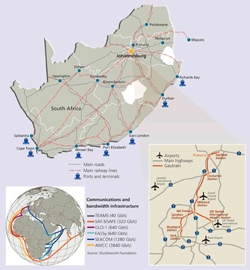
The largest inland port in Africa and the largest container depot in SA, the City Deep Transport Logistics Hub, are found in Joburg.
Joburg is also home to the largest fresh produce market in Africa. The Joburg Market is located in City Deep, just 5km from the City’s central business district and 26km away from OR Tambo International Airport. The impressive 63-hectare property can be accessed from all the main freeways, drawing buyers from all over SA as well as from neighbouring countries, such as Botswana, Swaziland, Mozambique and Zimbabwe.
Telecommunications:
Joburg is the telecoms hub of South Africa, which ranks 23rd in telecommunications development in the world. The city hosts the headquarters of numerous local and international operations, and serves as the base for multi-nationals operating in the rest of the continent.
SA is the 4th fastest growing GSM (Global Systems for Mobile Communications) market globally and is growing at a rate of 50% per annum. SA has 83% penetration of mobile phones, with 34 million active handsets and 70% of these being data capable.
SA is also the continent’s dominant Internet centre, with a quarter of Africa’s users. Joburg-based companies are central to the Internet industry, with nine of the 12 major Internet Service Providers listed by the ISP Association based in Joburg.
Lifestyle
Quality of life
Joburg enjoys near-idyllic weather year-round. Summers are pleasantly warm, with hot summer days often cooled down by afternoon rain.
Joburg is a vibrant, diverse, cosmopolitan city: a melting pot of nationalities, races, religions and cultures. It offers a unique blend of first-world sophistication and emerging market vitality. The City is renowned for its hospitality – possibly because many residents weren’t born here but have been attracted by the lively job market and upbeat lifestyle. Joburgers excel at making people feel welcome.
As foreign investment continues to grow, Joburg is becoming home to large concentrations of foreign residents and it is not unusual to hear French, Portuguese, German, Italian, Greek, Hindi or Mandarin around town.
For more info, go to Joburg Tourism
Cost of living
Living in Joburg costs around half that of major European cities. The Mercer Cost of Living Survey in 2014 ranked the City at 203rd out of 211 countries, making it one of the least expensive expat destinations in the world.
Index compares the price of a Big Mac globally, based on the concept of Purchasing-Power Parity (local price divided by price in the US) :
| South Africa | 1.89 |
| Russia | 2.15 |
| Indonesia | 2.33 |
| Hong Kong | 2.48 |
| China | 2.83 |
Housing and accommodation
Joburg offers a range of housing options from small apartments close to business areas, through cluster homes or townhouse in complexes, to standalone homes on large properties.
In 2013, according to The Global Property Guide, a two-bedroom apartment In Joburg’s northern suburbs cost ZAR 10,255.80 (approx. USD 1,282.00 or GBP 538.00) while a 420 sq. m home cost ZAR 23,431.20 (approx. USD1,892.07 GBP 1,229.44) per month to rent. For those interested in buying property, the Global Property Guide states that in South Africa in 2014:
• the average price of small homes (80-140 sq. m) was ZAR852,000 (US$73,710)
• the average price of medium-sized homes (141-220 sq. m) was ZAR1,191,000 (US$103,038)
• the average price of large homes (221-400 sq. m) was ZAR1,814,000 (US$156,937)
Several professional relocation companies operate in Joburg to ease moving to the city.
Education
Many expatriates and the diplomatic community in Johannesburg choose to send their children to one of the city’s excellent private schools which offer first-class education. In addition, the city is home to a number of international schools, including the American International School of Johannesburg, The Deutsche Internationale Schule Johannesburg, the British International College South Africa and the Lycée Français Jules Verne.
The city is home to two major universities, the University of the Witwatersrand (Wits), and the University of Johannesburg (UJ), both with proud traditions and global reputations. Wits has an outstanding academic reputation, has earned the respect of the international community and has attracted international students and researchers. Other universities include the University of South Africa’s Florida Campus and the local campus of Australia’s MONASH University. Providing high-quality vocational education and training through practical and theoretical experience, public Further Education and Training (FET) colleges in Joburg work closely with local industry to help fulfil the need for trained, skilled and qualified employees.
Globally-recognised executive education, short management courses, business degrees and customised corporate programmes are all on offer. Our City features two South African university business schools, the University of Pretoria’s Gordon Institute of Business Science (GIBS) and The Graduate School of Business Administration, otherwise known as the Wits Business School (WBS).
GIBS was ranked as one of the top providers of executive education programmes in 2014, at number 42, by the UK Financial Times (FT) and remains the only African and Middle Eastern Shool in the global Top 50. Wits Business School also achieved a top-100 ranking, coming in at 62nd in the world.
Joburg is also home to Henley Management College, one of the top-ranked business schools in the world, which launched its MBA in South Africa in 1992.
Schools
Many expatriates andthe diplomatic community chose to send their children to the excellent private schools, offering first-class education, including international schools such as:
- St Johns College, a private boys school in Houghton
- American International School of Johannesburg
- British International College South Africa
- Deutsche Internationale Schule Johannesburg
- Lycée Français Jules Verne
Universities
- The University of the Witwatersrand
- University of Johannesburg
- Further Education and Training (FET) colleges offer high quality vocational education and training through practical and theoretical experience.
Executive Education
Globally recognised executive education, short management courses, business degrees and customised corporate programmes are all on offer. SA ranked 30 (133 countries) re quality of management schools in the World Bank and IFC’s Global Competitiveness Index 2009 – 2010.
- GIBS (Gordon Institute of Business Science), ranked in top 45 business schools globall
- The University of Johannesburg
- The University of Johannesburg
- The Graduate School of Business Administration (Wits Business School)
- UNISA Graduate School of Business Leadership
- Henley Management College, one of the world’s top ranked business schools, has an office in Joburg, the only HMC centre in the African continent.
- For more info on MBAs available in SA, visit MBA site
Education
While SA’s public healthcare system faces challenges, the country’s private health care sector offers world-class medical and health care. Those that can afford it, or mid- to upper-income earners, tend to belong to private medical aid or hospital schemes, and use Johannesburg’s private doctors and hospitals. Foreigners also flock to Joburg for surgical procedures as our highly trained doctors have an excellent international reputation, and surgery costs are often significantly lower than elsewhere in the world. Joburg’s plastic surgeons in particular attract large numbers of foreigners who often combine cosmetic surgery with a recuperative African safari or health spa holiday.
Safety and security
Collaboration with both national and provincial authorities, as well as the private sector and communities, is bearing fruit, as all stakeholders work together towards a safer Joburg and SA.
The City has invested in a CCTV infrastructure in the Inner City, including a round-the-clock operational control centre. This provides surveillance, as well as valuable assistance for urban management, traffic management and service delivery breakdowns. The Inner City’s integrated safety and security plan also involves visible policing and law enforcement.
Joburg’s suburbs are well serviced by private security companies. Private business initiatives have also formed close partnerships with the various law enforcement agencies at local level. These have resulted in successful projects such as City Improvement Districts. Business Against Crime works closely with the Justice Department and SAPS, making tangible efforts to improve the management of, and responses to, safety and security.
The City is also focusing its efforts on improving its response and planning with regard to emergency management services and ensuring that there is a robust and constant focus on updating its disaster management plan, through its dedicated Emergency Services Management department. Communities are part of the education programme to ensure effective response to potential disasters.
The work undertaken by Joburg as a host city for FIFA World Cup 2010 set up an important benchmark and enabled a blueprint for joint planning between the City’s safety and security, health and transport units for major events post 2010.
Safety and security
Joburgers tend to be passionate about sport, particularly rugby, soccer and cricket, making the city a great option for sports lovers.
Joburg also has several member-based sports and recreation clubs which offer excellent sporting facilities, restaurants and bars. The City boasts several beautiful, first-rate golf courses.
Restaurants offer everything from haute cuisine to casual al fresco eating, while Joburg is increasingly being targeted by major hotel groups so that the northern suburbs in particular boast many of the world’s best-known hotels, including the Hyatt, Radisson Blu, Marriott, Hilton InterContinental, Holiday Inn and Mercure.