

Human Settlements
Vision and Mission
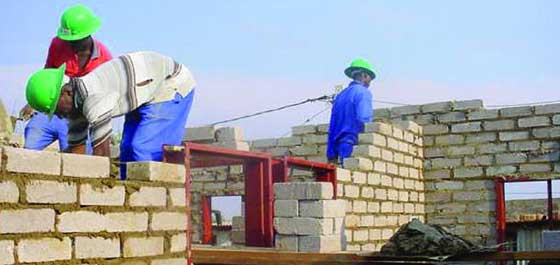
One of the key deliverables expected of the department is the development of Sustainable Human Settlements. This is in line with the policies (such as the Breaking New Ground Policy) set out by the National Department of Human Settlements.
The department is also expected to contribute towards the realization of sustainable and integrated delivery of water, sanitation, energy and waste; and contribute to climate change.
Vision
A diversified provision of sustainable Human Settlements for citizens of Johannesburg.
Mission
The Human Settlements Department’s mission and vision statement are driven by the following set of values:
To improve the quality of lives of our beneficiaries, creating neighborhoods that people love, live, work, play and do business in.
Values
The Human Settlements Department’s mission and vision statement are driven by the following set of values: Honesty, Integrity, Accessibility ,Transparency, Commitment, Beneficiary Centric, Trust, Accountability.
SECTION 79 HUMAN SETTLEMENTS
A LEGISLATIVE ROLE
IDP, Budget and By-law Process
1.The consideration and oversight of the development of the IDP and budget in respect of the Human Settlements Department and its Municipal owned entity (MOE), the Johannesburg Social Housing Company (JOSHCO).
2.The consideration of the quarterly performance reports of the Human Settlements Department and its Municipal owned entity (MOE), the Johannesburg Social Housing Company.
3.To exercise oversight over the development and implementation of all by- laws, strategies and policies of the Human Settlements Department and its Municipal owned entity (MOE), the Johannesburg Social Housing Company.
4.The consideration and oversight of draft tariffs, fees and charges in respect of Human Settlements Department functions in the City.
B PARTICIPATORY AND REPRESENTATIVE ROLE
1.Promote public participation in the Committee’s activities.
2.Ensure public consultation on any new by-law referred by Council and/or Programming Committee.
3.Promote public participation in the key planning processes of the City as they relate to Human Settlements Department and its Municipal Owned Entity (MOE), The Johannesburg Social Housing Company.
4.Ensure that key issues of public concern relating to the Human Settlements Department and its Municipal Owned Entity (MOE), the Johannesburg Social Housing Company are brought to the attention to Council.
OVERSIGHT ROLE
1.Exercise oversight over the quarterly performance of the Human Settlements Department and its Municipal Owned Entity (MOE), the Johannesburg Social Housing Company.
2.Exercise oversight over any matter referred to the Committee by the Speaker, Council and/or its Programming Committee.
3.Exercise oversight over any matter or activity of the Human Settlements Department that will be of concern to the Committee.
4.Invite the MMC or any official of the Human Settlements Department to account on any matter of interest to the Committee.
D REPORTS/RECOMMENDATIONS TO COUNCIL
1.To make recommendations to Council as a result of the oversight process outlined above.
2.To report on the oversight visits of the Committee.
3.To report Quarterly and Annually on the Performance of the Committee.
4.To submit proposal/comments on Provincial and National Bills and proposed policies affecting local government.
Flagship projects
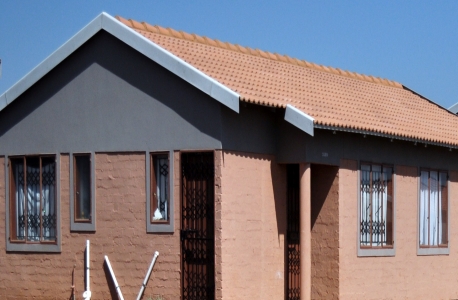
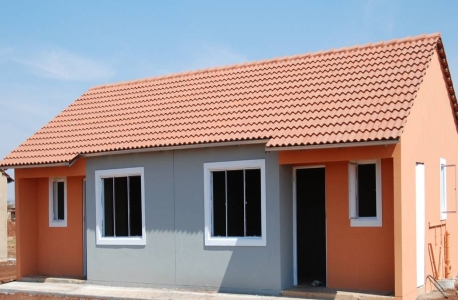
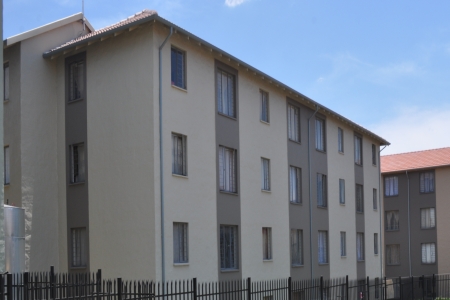
The Lehae Mixed-Income Housing Development Project is situated along the Golden Highway, a stone-throw distance from the Trade Route Mall neighbouring Lenasia. Upon completion, the housing development will yield a total number of 5344 housing opportunities consisting of Breaking New Ground (BNG)/ RDP, bonded and rental units. The project will also boast socio-economic amenities in line with developing liveable cities where residents are able to work, live and play in the form of six community facilities, two primary schools, two secondary schools, four crèches, eight religious institution sites, two taxi ranks and four business sites.
Lufhereng Mixed-Income Housing Development Project
The Lufhereng Mixed-Income Housing Development, the biggest housing development in Gauteng, was launched in August 2010. Once complete the development is expected to yield 24 000 housing opportunities. The development, developed as an extension of the Soweto residential complex is situated south-west of the Johannesburg Central Business District. The project’s location and packaging ensures that the community is located close economic opportunities. And upon completion itwill provide residents with social and economic amenities such as schools, crèches, religious sites, clinics, recreational facilities, parks and several business sites.
Fleurhof Mixed-Income Housing Development Project
The Fleurhof Mixed-Income Housing Development Project is a transit-oriented mixed-income development project nestled along the Main Reef Road, 13 km west of the Johannesburg Central Business District. The project forms part of the City of Johannesburg’s drive to promote infill development within the urban edge. Upon completion, the development project will yield just over 9000 housing units. One-third of which will be RDP units and the final third will comprise of bonded houses. It will further yield mixed-use business centre sites, industrial sites, crèche sites, religious sites, community facilities, school sites and public open spaces.
Pennyville Mixed-Income Housing Development Project
The Pennyville Mixed-Income Housing Development Project is situated close to the New Canada Train Station. The development is built in four phases and offers beneficiaries different housing opportunities. Upon completion this project will yield a total of 3 200 housing units. The housing development is expected to yield affordable and sustainable housing and tenure options, in line with the National Department of Human Settlements’ Breaking New Ground initiative. Through the Pennyville housing development, the City has managed to provide housing opportunities for the Orlando East backyard dwellers and the Riverlea, Noordgesig and the Westbury communities.
Partnerships and Programmes
Partnerships
Programmes
- Public Housing Stock Management
- The sales and transfers programme deals with the transfer of council-owned housing stock to qualifying beneficiaries. Such transfers are done according to the national and provincial Acts and policies.
- To effect transfer to the qualifying beneficiary, a housing subsidy is allocated to the beneficiary in terms of the Extended and Enhanced Discount Benefit Scheme. Under this scheme, the beneficiaries are allocated the full subsidy amount.
Sectionalisation of flats
Upgrading informal settlements
- The crux of this programme is the upgrading of the existing informal settlements that are located on suitable land into formalised townships.
- To ensure that these settlements are upgraded, essential services like water and sanitation are provided. The aim of the programme is to provide houses to qualifying beneficiaries.
Formalisation of informal settlements
This programme is carried out in different phases, with the end goal of securing land tenure rights for beneficiaries on an already occupied piece of land.
Top structure construction
Greenfield development
- Greenfield programmes target land where no development has taken place. Firstly, the development in the area is formalised; this is followed by the installation of services and lastly by the construction of top structures.
- Hostel redevelopment programme
- The focus of the Hostel Redevelopment Programme is to upgrade public and staff hostels from the current single sex units into liveable family or communal units.
Bulk infrastructure
People’s Housing Process
Flat refurbishment
| Member of the Mayoral Committee for Human Settlements
Tel: 011 018 6696
Fax: 011 018 6618
Address: 222 Smit Street, Braamfontein, 2017 |
| Executive Director: Human Settlements
Tel: 011 018 6667
Fax: 011 018 6669
Address: 222 Smit Street, Braamfontein, 2017 |
Contacts
|
Tel: 011 3479960 Fax: 011 3479971
Address: 400 16th Road, Randjiespark, Midrand, 1682
|
|
Region B Tel: 011 718-9619
Fax: 011 718-9760
Physical Address: Diners Club Building, Symonds Street, Auckland Park
|
|
Region C Tel: 011 761 0252
Fax: 011 761 2714
Physical Address: 100 Christian de Wet Street, Roodepoort |
|
Region D Tel: 011 933 2257
Fax: 011 933 4076
Physical Address: Corner Nicholas and Chris Hani Road behind Bara Mall / Next to Pikitup Depot
|
|
Region E Tel: 011 531-5536
Fax: 011 531-5651
Address: 24 Friedman Drive, Sandpark Building, 3RD Floor, Sandton
|
|
Region F Tel: 011 681 8114/5
Fax: 011 681 8314
Address: Eureka House 92 Marlborough Road, Springfield 2190
|
|
Region G Tel: 011 855-5438
Fax:011 855-5673
Address: : No 1 Kartz and Smit Street, Ennerdale Extension 9
|