
Transport
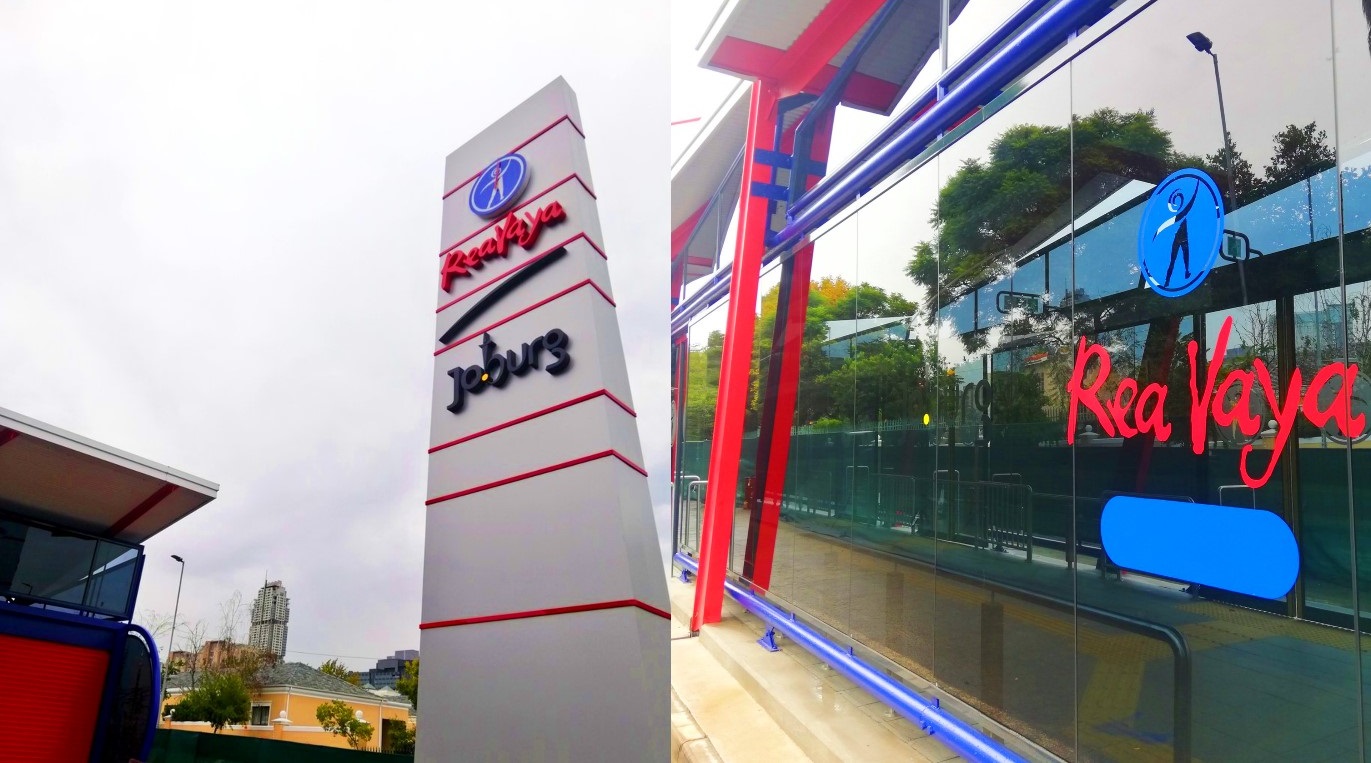
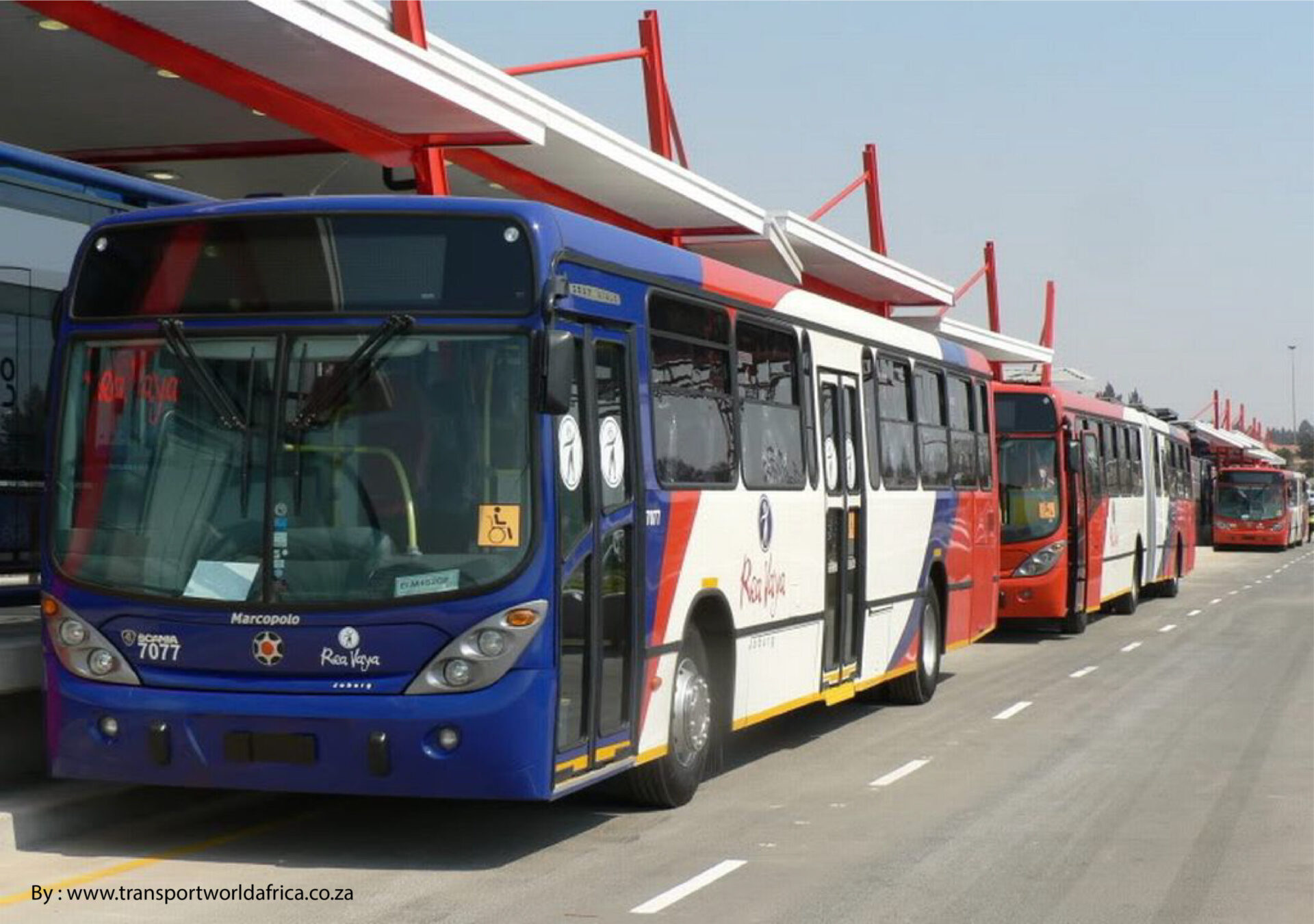
Johannesburg is a young and sprawling city, with its public transportation built in its infancy, geared towards private motorists, and lacks a convenient public transportation system. The City though has invested a large percentage of its budget toward an effective integrated public transportation system.
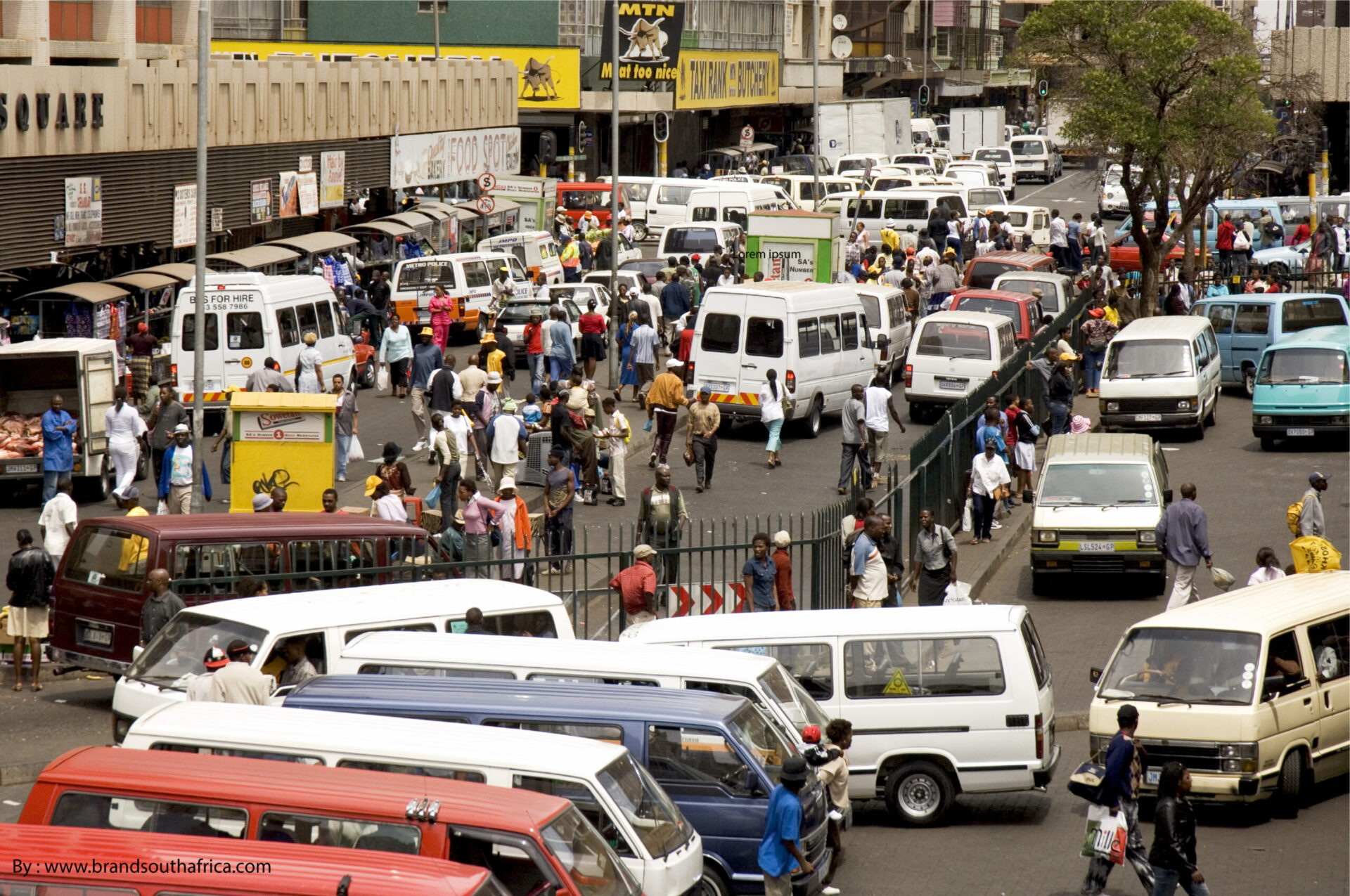
A significant number of the city’s residents are dependent on the city’s informal minibus taxis.
Air Transport
Johannesburg is served principally by OR Tambo International Airport (formerly Johannesburg International Airport and before that Jan Smuts Airport) for both domestic and international flights. Lanseria Airport, located to the north-west of the city and closer to the business hub of Sandton, is used for commercial flights to Cape Town, Durban, Port Elizabeth, Botswana, and Sun City. Other airports include Rand Airport and Grand Central Airport. Rand Airport, located in Germiston, is a small airfield used mostly for private aircraft and the home of South African Airways’s first Boeing 747 Classic, the Lebombo, which is now an aviation museum. Grand Central is located in Midrand and also caters to small, private aircraft.
Roads
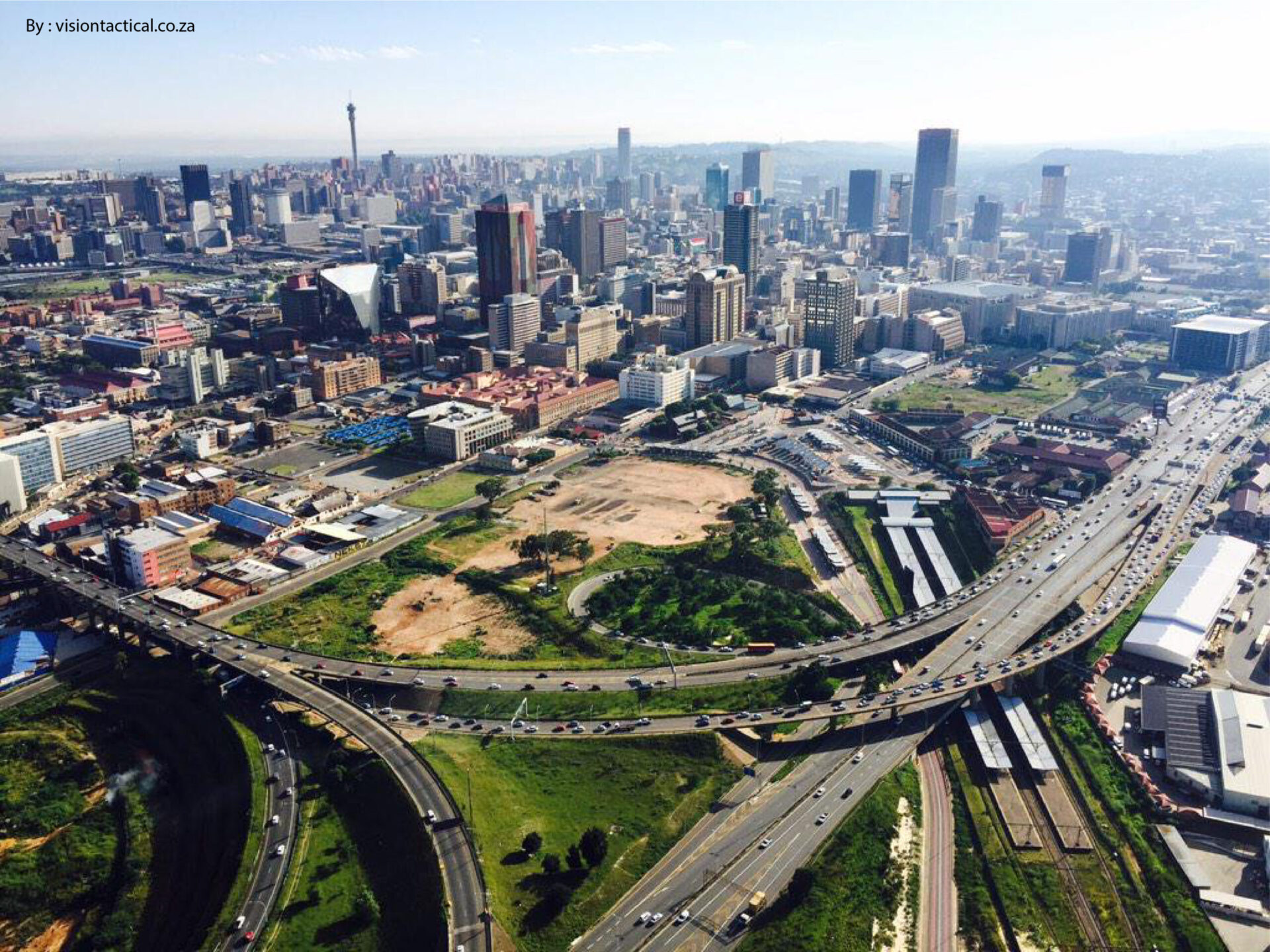
The fact that Johannesburg is not near a large navigable body of water has meant that ground transportation has been the most important method of transporting people and goods in and out of the city. One of Africa’s most famous “beltways” or ring roads/orbitals is the Johannesburg Ring Road. The road is composed of three freeways that converge on the city, forming an 80-kilometre (50 mi) loop around it: the N3 Eastern Bypass, which links Johannesburg with Durban; the N1 Western Bypass, which links Johannesburg with Pretoria and Cape Town; and the N12 Southern Bypass, which links Johannesburg with Witbank and Kimberley.
The N3 was built exclusively with asphalt, while the N12 and N1 sections were made with concrete, hence the nickname given to the N1 Western Bypass, “The Concrete Highway”. In spite of being up to 12 lanes wide in some areas, the Johannesburg Ring Road is frequently clogged with traffic. The Gillooly’s Interchange, built on an old farm and the point at which the N3 Eastern Bypass and the R24 airport Freeway intersect, is the busiest interchange in the Southern Hemisphere. It is claimed that the N1 is the busiest road in South Africa.
Johannesburg has the most freeways connected to it. It has the N1, N3, N12, N14, N17, R21, R24 and the R59, all leading to Johannesburg. The M1 and M2 freeways were built to direct traffic towards the city centre. These two freeways are congested due to mass urbanisation.
Johannesburg shares a network of metropolitan routes with Krugersdorp and Ekurhuleni.
Taxis
Johannesburg has two kinds of taxis, metered taxis and minibus taxis. Unlike many cities, metered taxis are not allowed to drive around the city looking for passengers and instead must be called and ordered to a destination. The Gauteng Provincial Government has launched a new metered taxi programme in an attempt to increase use of metered taxis in the city.
The minibus “taxis” are the de facto standard and essential form of transport for the majority of the population. Since the 1980s The minibus taxi industry has been severely affected by turf wars.
Mass transit
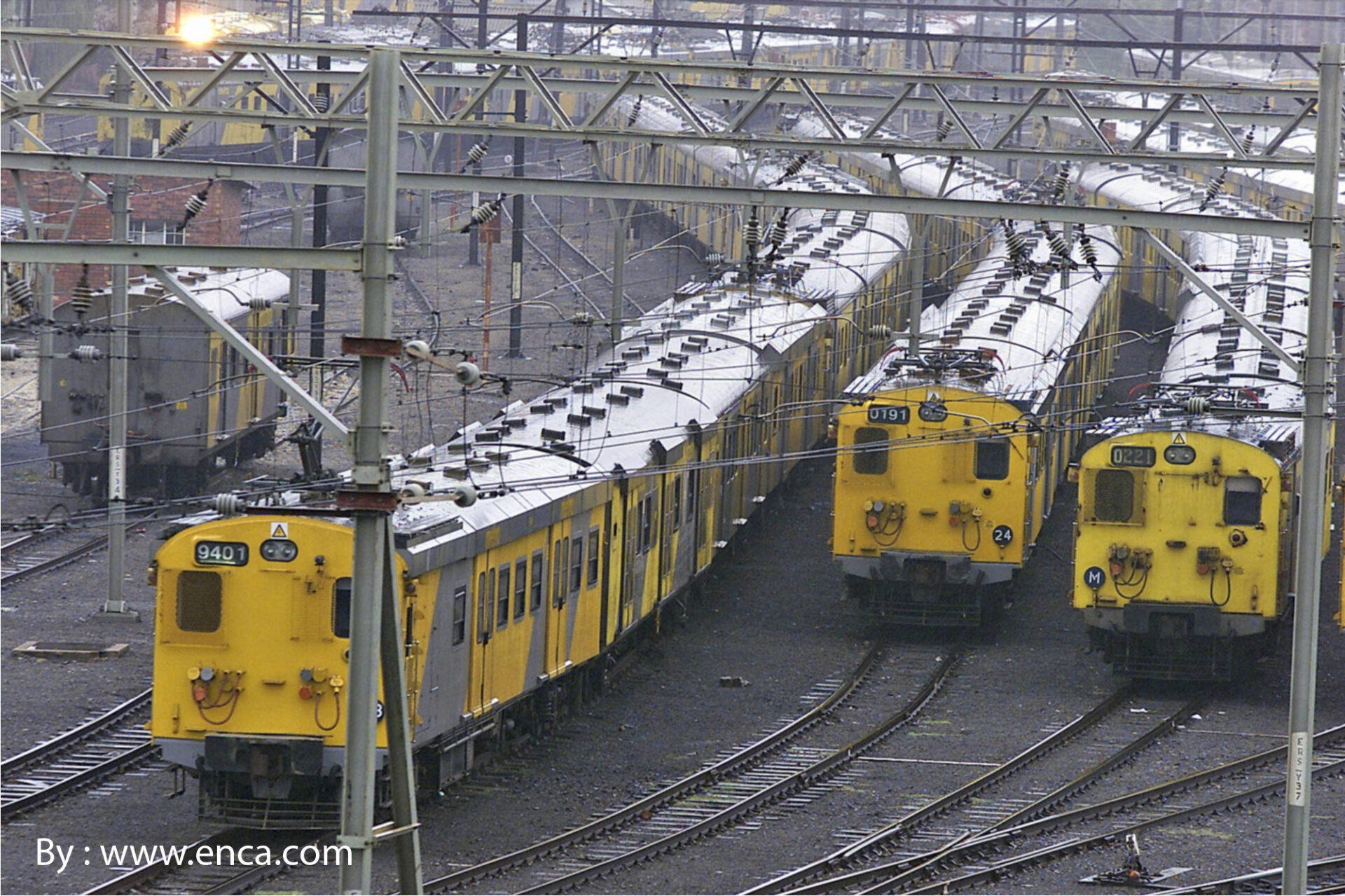
The Metrorail Gauteng commuter rail system connects central Johannesburg to Soweto, Pretoria, and most of the satellite towns along the Witwatersrand. The railways transport huge numbers of commuters every day.
However, the Metrorail infrastructure was built in Johannesburg’s infancy and covers only the older areas in the city’s south. The northern areas, including the business districts of Sandton, Midrand, Randburg, and Rosebank, are served by the rapid rail link Gautrain.
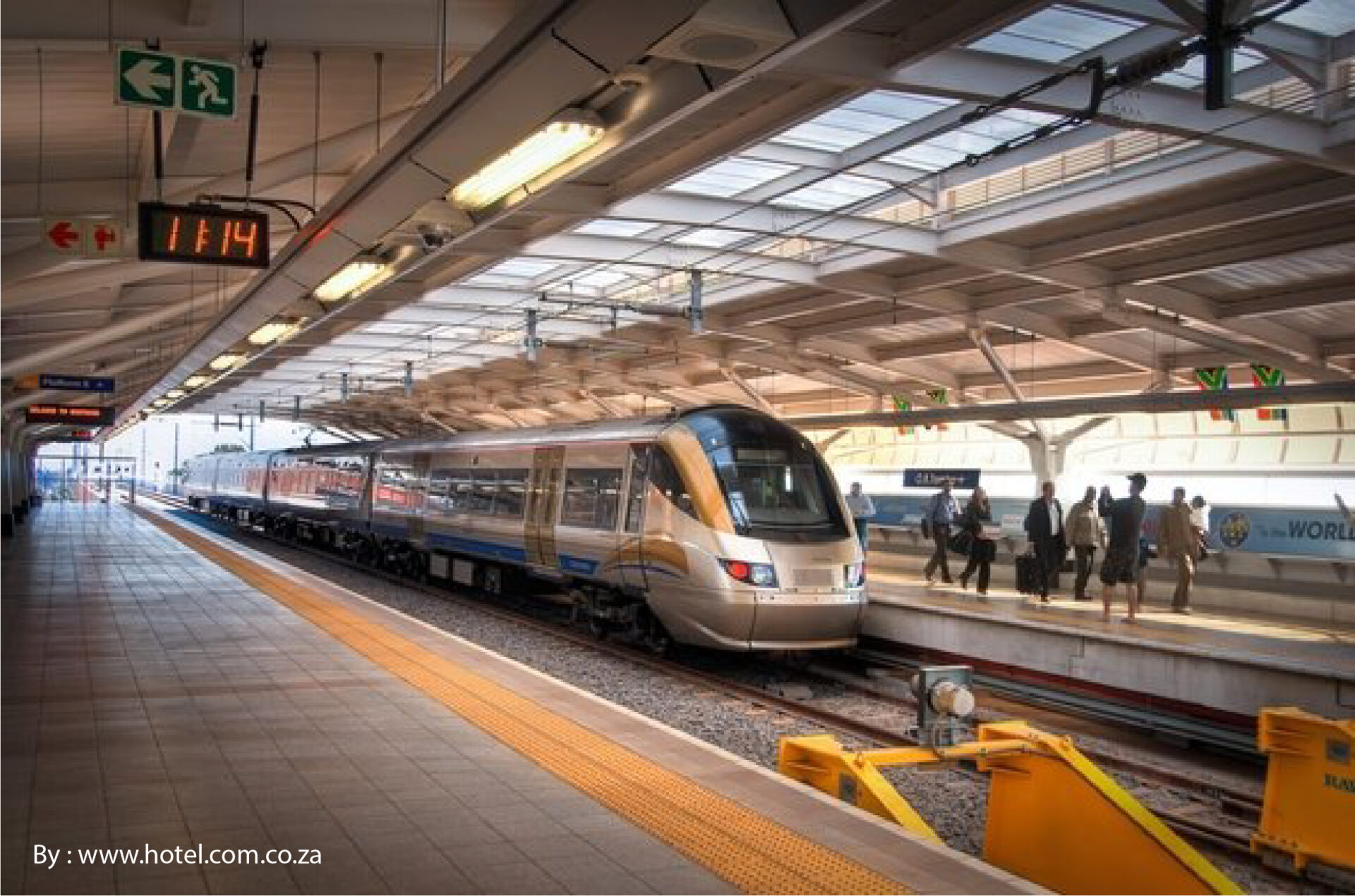
Gautrain station at OR Tambo Airport
A part of the Gauteng Provincial Government’s Blue IQ Project, Gautrain has made provision for a rapid rail link, running north to south, between Johannesburg and Pretoria, and west to east between Sandton and the OR Tambo International Airport. Construction of the Gautrain Rapid Rail started in October 2006 and was completed in June 2012. It consists of a number of underground stations, as well as above-ground stations.
Stations on the North-South line include Johannesburg’s Park Station (underground), Rosebank (underground), Sandton (underground), Marlboro (above-ground and raised), Midrand, Pretoria Station and Hatfield. There is also a line from the O.R. Tambo International Airport (above-ground and raised) travelling to Sandton via Rhodesfield (raised) and Marlboro. A 200 kilometer expansion is underway and will consist of 3 new lines and 18 new stations, this may sound like an insignificant amount however it is expected to cost R18 billion and one line (Soweto Mamelodi) could take 6 years to build, most of the new stations will be in Johannesburg.
The east-west line from the airport to Sandton opened in June 2010 in time for the 2010 FIFA World Cup, while the north–south line opened on 2 August 2011, except for Park Station, which opened in 2012.
The rail system was designed to alleviate traffic on the N1 freeway between Johannesburg and Pretoria, which records vehicle loads of up to 300,000 per week day.[96] An extensive bus feeder system has also been implemented, which allows access to the main stations from the outer suburbs, but is limited to a five-km radius, which neglects the rest of the suburbs. This is the first new major railway system that has been laid in South Africa since 1977.
In 2010, a high-speed rail link was proposed between Johannesburg and Durban.
Buses
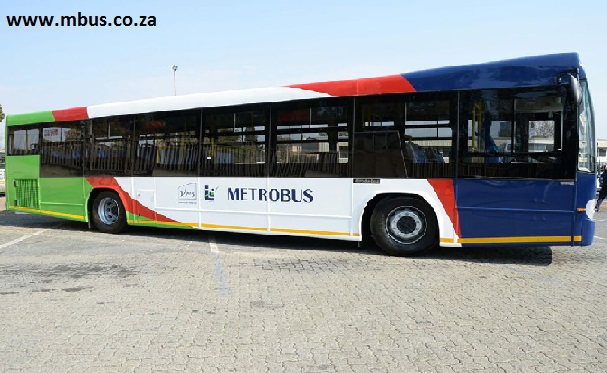
Johannesburg is served by a bus fleet operated by Metrobus, a corporate unit of the City of Johannesburg. It has a fleet consisting of approximately 550 single and double-decker buses, plying 84 different routes in the city.
This total includes 200 modern buses (150 double-deckers and 50 single-deckers), made by Volvo, Scania AB and Marcopolo/Brasa in 2002. Metrobus’ fleet carries approximately 20 million passengers per annum. In addition there are a number of private bus operators, though most focus on the inter-city routes, or on bus charters for touring groups. The city’s main bus terminus is situated in Gandhi Square, where passengers can also obtain information regarding the Metrobus service from the walk-in customer information desk.
Vaya Smart Launch Presentations
Vaya Smart Launch
- Micro Mobility Driving African Cities to Work for People
- City of Johannesburg Climate Action Plan: Green Mobility
- Travel Demand Management Program for the City of Johannesburg
- Transport strategy towards an integrated, sustainable, inclusive, and green transport
- Mobility as a Service how it can work in South Africa